Friday, June 24, 2016

Monday, June 6, 2016
Tuesday, May 5, 2015

Don't miss my BIG neighborhood garage sale on May 16 at Imagine in Chase Ranch. Several households will be participating. The sale runs from 7:00AM to 12:00 Noon. The community is located near the intersection of Ashdale Dr. and Rimpau Ave. in Corona, 1 block south of Santiago High School. See you there!
Wednesday, April 22, 2015
Just Listed!
Here's a preview of my latest listing at 1472 Vallejo in Corona! This is a charming 4 bedroom home that's just right for first home buyers or investors!
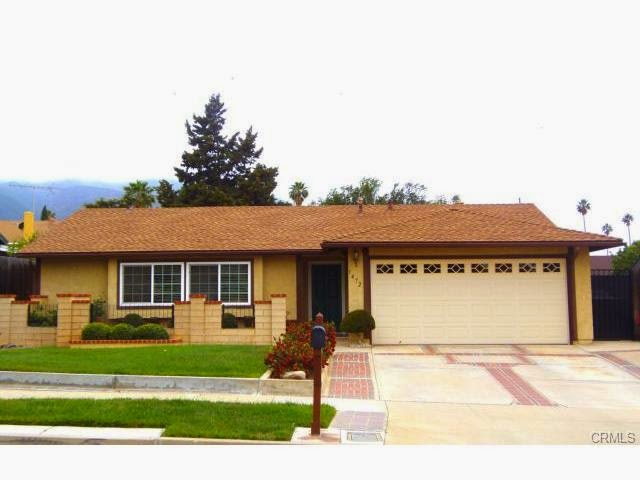
Click the link below for my virtual tour:
Thursday, October 9, 2014
Don't Miss Our Halloween Pumpkin Patch!
 |
| Tarbell Pumpkin Patch, Saturday October 18, 1:00 PM to 3:00 PM 315 Magnolia Ave, Corona in the Von's Shopping Center |
Tarbell REALTORS, Corona is happy to present it's annual pumpkin patch! This annual tradition is great fun for the kids- we'll have hot dogs, jumpers, a haunted house, games, goodies, pumpkins and more! Best of all, it's free to our guests! Be sure to join us Saturday, October 18 from 1:00PM to 3:00PM for the festivities. 315 Magnolia Ave, Corona, CA 92879 See you there!
Friday, September 19, 2014
A Guide to Home Sales- Find the Right Selling Price!
 |
| A Successful Sale Requires the Right Balance |
Selling a home can seem like a complicated process to many homeowners, especially if they're confused with regard to finalizing their listing price.
Price is the single most important factor in determining the successful sale of your home. Your real estate agent will
prepare a comparative market analysis or CMA
to help you determine the optimal point at which to list when selling your property. In
addition to hiring an expert agent, you can take some steps on your own to
assist in the process and ensure that your home finds a buyer. So just how can you find the right listing
price and make the most of your home’s sale?
The best way to determine your
home’s listing price is to conduct a survey of the other homes in your
neighborhood and perform a quick comparison of similar properties to help
provide you with an estimated listing price.
To conduct your quick comparison, here is what you need to examine:
To conduct your quick comparison, here is what you need to examine:
How your Home Measures Up
Make a list of the features of your home and compare them with others on the block. Every homeowner modifies their home according to their preferences, and it is quite possible that although the exterior is the same, the interior may add or detract from the value of the home. Real estate agents are frequently asked to prepare a market analysis sight unseen, so informing your agent of upgrades, renovations and other changes to your property will help to ensure the accuracy of your CMA.
Make a list of the features of your home and compare them with others on the block. Every homeowner modifies their home according to their preferences, and it is quite possible that although the exterior is the same, the interior may add or detract from the value of the home. Real estate agents are frequently asked to prepare a market analysis sight unseen, so informing your agent of upgrades, renovations and other changes to your property will help to ensure the accuracy of your CMA.
Determine the square footage of
the living space; age and condition of the house; the number of bedrooms and
bathrooms in the home; availability of amenities, appliances and other upgraded
features; the overall size of the property including the yard; the condition
and upkeep of the structure; and finally; the location of the home, which can
greatly impact its value.
Previously Listed Prices
Consider the listed prices of the homes in your neighborhood. Look as far back as 3 months ago if the market is stable. However, in fast-paced markets, you may even consider only the prices listed in the past 60 days.
Consider the listed prices of the homes in your neighborhood. Look as far back as 3 months ago if the market is stable. However, in fast-paced markets, you may even consider only the prices listed in the past 60 days.
The easiest way to compare home
prices on your own is to search online. Real estate listing websites can provide
you with the information you need to discover the prices of homes that have
been put on the market in the previous months. Simply use your zip code to gain
an estimate of the prices of homes in your area. It is important to understand when using
these sites that the information provided is aggregated from many sources, and
may not be entirely current or accurate. Therefore, listing sites should be
regarded as providing only cursory guidance.
Your real estate agent will be able to provide you with additional
information on your market and your home in your CMA.
Selling Price
Anybody can quote a high price
and put their home on the market to be sold, but the listed price does not determine the true value of the home within
the local real estate market. In order to discover the worth of the houses
surrounding your property, you need to determine their actual selling price.
For many homes, the actual selling
price will vary greatly from the price that was originally listed by the owner.
Delays in the sale of a property are painfully common when buyers and sellers
struggle to come to an agreement on the value of the home. It is best to demand
and list a realistic price for your home, especially if you are in need of a
quick sale.
What's In Demand
After evaluating your home, and the ones surrounding it, you will become aware of the features that have resulted in the final selling price of the neighboring properties. This will provide you with an estimate of the local rates. Accordingly, you can analyze the features of your property, comparing them with the sold homes and determine the right listing price for your abode.
After evaluating your home, and the ones surrounding it, you will become aware of the features that have resulted in the final selling price of the neighboring properties. This will provide you with an estimate of the local rates. Accordingly, you can analyze the features of your property, comparing them with the sold homes and determine the right listing price for your abode.
If you are seeing an emerging
trend of unsold properties in your area, try to discover why they are not being
sold. Has your neighborhood become too noisy and crowded? Are those homes in
poor condition? Do they lack modern amenities? Once you discover the reasons,
try to correct them within your own home to increase its demand. Your agent will be able to provide you with guidance
on the corrective action necessary to effect a successful sale.
A listing price that is too high will turn the
buyers away, whereas too low a price may be unfavorable for you. So opt for a
balance, and find an experienced local realtor to sell your home.Are you selling a home in the Riverside or Orange Counties? I'm here to help. (951) 310-0397
Saturday, August 16, 2014
Superadequacies: Why Your Palace May Be A Home Buyer's House of Horrors
.jpg) |
| Door to Nowhere, Winchester Mystery House |
By Bruce Ueno
From the Latin for "above, over or beyond", at first blush a "superadequacy" sounds like it could be a good thing. After all, who wouldn't want a home that is far more than adequate. Home appraisers and real estate professionals however, have a much different definition for the term. In real estate parlance, superadequacies can be defined as improvements to a property that exceed market requirements and that add little or nothing to the property's value. To the contrary, many of these over- improvements can actually decrease a home's equity and its desirability to future buyers.
As a Realtor, I typically see several mini-Winchester houses during the course of a year, those ambitious but ill-conceived renovation projects that cause potential buyers to scratch their heads and ask "what on earth were they thinking?" Here are a few tip-offs that your home may make the list:
Home Is a Hodgepodge
Home design is a complex art, and residential architects are well-versed in achieving the ideal balance of form and function. In a properly designed home, every room, every window, and every door has a place and a reason to be there. Do-it-yourself renovations often ignore the home's original design objectives with disastrous results. I recently viewed a 1300 square foot house with a rambling 1300 square foot addition that included such lovely amenities as an 8' outdoor Jacuzzi in the bonus room, a windowless, dungeon-like game room hidden behind an obviously fake false bookcase, and a trophy wall adorned with the owner's prized collection of of empty beer cans (included in the sale, and valued at $4,000). A series of agents had attempted to sell this home over the years, all of them without success.
Options are Gone
Presumably, owners renovate in order to get some added benefit from the home, but to get a sense of the impact the improvement will have upon a home's attractiveness to a future buyer, it's also necessary to think in terms of the attributes that are sacrificed in order to receive the benefit. For example, a room addition will add interior space, but if it takes up a large portion of the back yard potential buyers may come to see the negatives as outweighing the positives. They'll see that there's no room for a mom's vegetable garden, no play area for the kids and room for an outdoor entertainment area; all bad news for a seller.
Property Boundaries and Easements are Ignored
This is a topic in and of itself, but I've included a mention here because encroachments and superadequacies often go hand in hand. One hapless property owner I know built a large room addition that opened onto a local power company's easement, with the mistaken notion that the company would never actually exercise it's right to the use of the property. When the utility announced plans to run new lines through the easement, the homeowner fought the company and lost. The back door of his home now faces a high wall just inches away, rendering a sale virtually impossible.
It's the Biggest House on the Block
When it comes to houses, you really can have too much of a good thing. The old saw holds true here- from a resale standpoint it's best to be have the smallest home in a neighborhood of larger homes than the largest home in neighborhood of smaller ones. Appraisers and real estate professionals know this as the principle of regression. If your home is a 3000 square-foot behemoth in an area where others houses average 1600 square feet, the value of your home will be drawn down by the value of the smaller homes in the area. Potential buyers who want a 3000 square-foot house will look for it in a neighborhood of similar properties, not in yours.
It's Out of Character for the Area
Even if you home's square footage is in line with the neighborhood, other improvements that are not in keeping with local norms can impair the value of your home. The addition of an ornate stone facade to a home in a tract of plain-Jane, cookie-cutter houses, for example, is not likely to make the property appraise for any more than other homes in the area, and may actually cause the value of the adjacent properties to decline.
It's Quirky
When we want to describe something as being unimaginative or ordinary, we often refer to it as being "plain vanilla", like that same 'ol drippy ice cream cone you may have enjoyed as a kid. The fact is that vanilla has been the top selling ice cream flavor for years, and it's likely to stay that way for some time to come. People like vanilla, and vanilla has the special quality of being compatible with just about everything. What is true for ice cream also holds true for houses. No matter how much you may have spent customizing your castle, the sad fact of the matter is that buyers want to project their own vision onto the blank canvas of their future home. Your home should be a special place with its own charm and character, but houses that suffer from too much character are a tough sell even in the best of neighborhoods. The late Dick Clark's Malibu abode, infamously fashioned in the style of cartoon caveman Fred Flinstone, has been on and off the market for over a year and has failed to find a buyer despite it's spectacular location and a half-million dollar price reduction- the more "special" your home is, the fewer potential buyers it's likely to find.
If your home suffers from one or more of the symptoms of superadequacy, all hope is not lost. Your home can still attract the right buyer if you are prepared to make a few changes and compromises on the way to a sale. An effective real estate agent can guide you through the process of minimizing the problem areas and positioning your home for maximum return on your investment.
Need guidance in the sale of your home? Contact me today for a no-obligation consultation! (951) 310-0397
Subscribe to:
Posts (Atom)